James Wilson - The Forgotten Founding Father
If you haven't heard of James Wilson, I don't blame you. Many Americans haven't, or at least don't know much about the man. He was a man who believed in justice and liberty, not only when it suited him, but universally. Similar to how fellow founding father John Adams was the defendant for the British soldiers involved in the Boston Massacre, James Wilson regularly defended British Loyalists in court during a period of patriotic fervor in the colonies. As you can imagine, this likely raised more than a few eyebrows amongst his comrades. Nevertheless, Wilson remained committed to his principles.
Throughout his life, James Wilson created an impressive portfolio of writings that, in my opinion, are often quite beautiful and can be described as a sort of political quasi-poetry. Last week, I read his influential pamphlet "Considerations on the Nature and Extent of the Legislative Authority". I found myself quite taken by it and thought it would be fun to summarize in honor of America's upcoming 250th birthday.
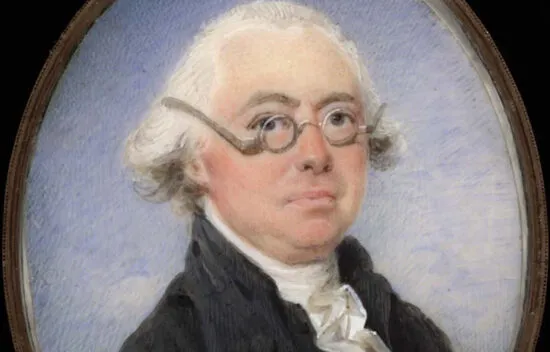
The American colonists were exceedingly proud of their British heritage and had the strongest desires to make peace with the king. Wilson begins his essay explaining how the British constitution safeguarded against Tyranny and protected the natural rights of English citizens. He specifically notates that the frequency of elections, and the interests of elected representatives being in alignment with the voters checks corruption. "The interest of the representatives is the same with that of their constituents. Every measure, that is prejudicial to the nation, must be prejudicial to them and their posterity. They cannot betray their electors, without, at the same time, injuring themselves. They must join in bearing the burden of every oppressive act; and participate in the happy effects of every wise and good law."
Wilson then builds off this foundation by explaining that the relationship between Britain and America did not exemplify that previously mentioned alignment. He reminds the reader that the American colonists did not elect members of the British parliament. Members of the British House of Commons may have been tempted to act in opposition to American liberties and interests, as it may have been politically beneficial to campaign on policies which exploited the Americans for the glory and interests of the home nation.
James Wilson was second in contribution only to James Madison in the creation of the US Constitution. That document would create the American judicial system which was heavily inspired by English common law. We can see inklings of this inspiration in how Wilson bases much of his argument from the same principles. He discusses an instance in which an English court ruled statutes created by British parliament did not apply to Ireland, and that Ireland was governed by its own statutes within the empire. Why shouldn't America be treated the same way, he suggested? Why should America be subject to British taxation without American input?
Personally, my favorite of Wilson's arguments is that the Americans were, legally, being treated as a conquered people. He fiercely opposes this status quo, implying it is unjust because the colonists left England of their own volition, with the king's blessing, and for the king's benefit. He reminds the reader that the colonists left for a new world with no promise of prosperity or comfort and did the exhaustive work of building out a foundation for English culture in the new world themselves."How came the colonists to be a conquered people? By whom was the conquest over them obtained? By the house of commons? By the constituents of that house? If the idea of conquest must be taken into consideration when we examine into the title by which America is held, that idea, so far as it can operate, will operate in favour of the colonists, and not against them. Permitted and commissioned by the crown, they undertook, at their own expense, expeditions to this distant country, took possession of it, planted it, and cultivated it. Secure under the protection of their king, they grew and multiplied, and diffused British freedom and British spirit, wherever they came."
I find it endearing that Wilson concludes his pamphlet by restating the American's warm affections towards the king and doubling down on the colonist's sense of kinship with the British. It appeared to me that in his view, the friction between colony and motherland was heartbreaking. They had love for their heritage and their sovereign. In their eyes, the conflict truly lay with what they viewed as an oppressive parliament.
This is the summer of America's semiquincentennial, it's a wonderful time to read the writings of the founding fathers. "Considerations on the Nature and Extent of the Legislative Authority" is quite readable over 250 years later, and also not very long. As such, it's easy for me to recommend revisiting for yourself.